

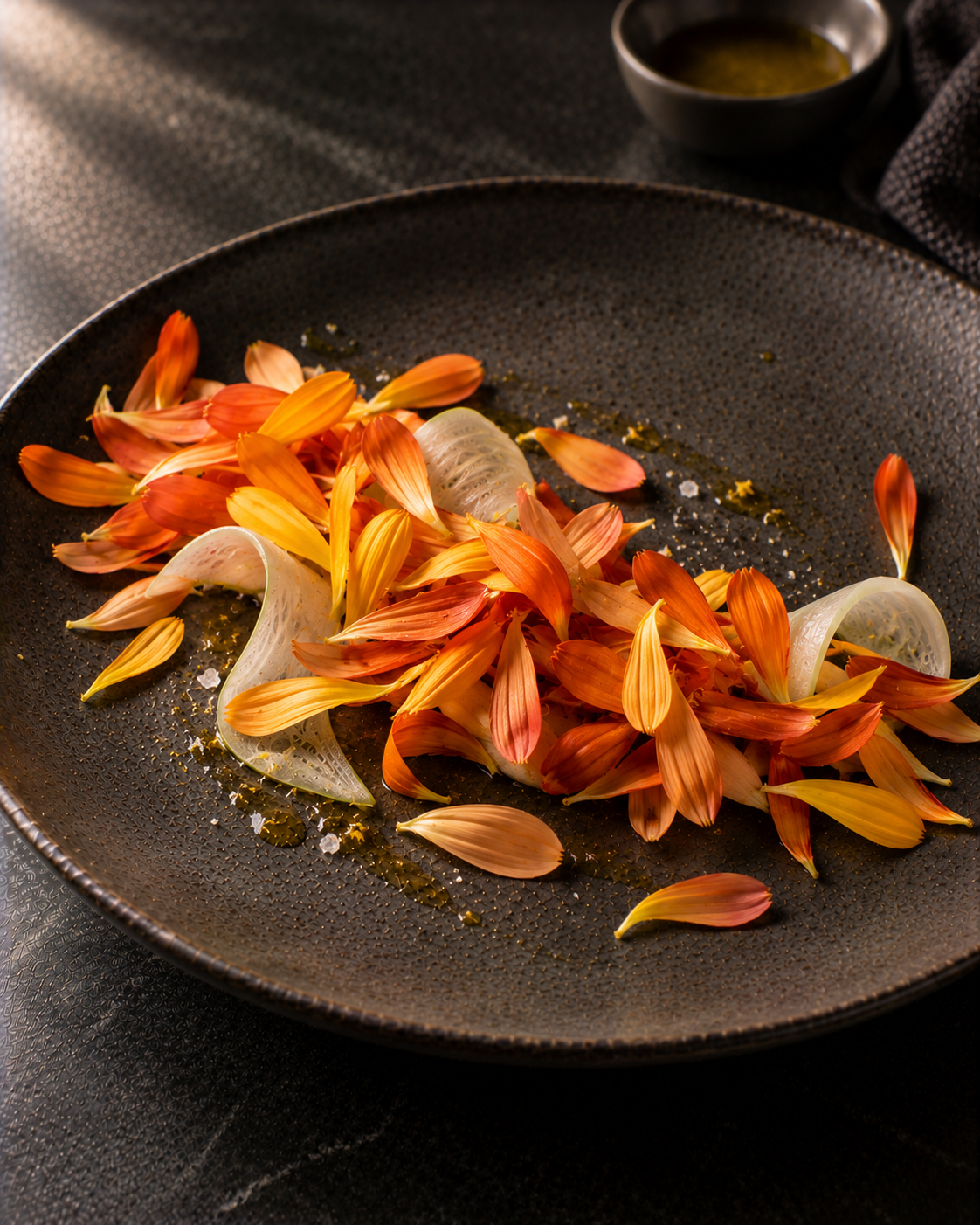
Orange Flash Calendula Petals
Tender Orange Flash Calendula Petals bring bright tanginess, restrained bitterness, delicate texture, and warm copper, peach, rose, and cream tones.
Choose options
Tender Orange Flash Calendula Petals bring bright tanginess, restrained bitterness, delicate texture, and warm copper, peach, rose, and cream tones.
Inside This Superpower
Freshly harvested Orange Flash Calendula Petals are separated from the naturally more bitter flower base before packaging, leaving only the delicate culinary petals. Their flavor begins fresh and lightly tangy, followed by a measured bitter edge and subtle floral-green character. The thin petals have almost no resistance on the palate, so they disperse flavor differently from a whole edible flower and integrate naturally through dressed greens or over warm savory ingredients. Copper, rose, peach, and cream tones create movement across the plate, but their tangy-bitter flavor gives them a genuine culinary purpose beyond decoration.
- CATEGORY: Edible Flowers and Hearty Shoots
- VARIETY: Orange Flash Calendula
- BOTANICAL NAME: Calendula officinalis
- WHAT YOU’LL RECEIVE: 0.35 oz (10 g) of freshly harvested Orange Flash Calendula Petals, separated from the flower base and packaged unwashed for freshness.
- STORAGE: Keep refrigerated near 38–41°F in the original shallow sealed tray, protecting the delicate petals from dehydration, crushing, excess moisture, and condensation.
- BEST ENJOYED WITHIN: Within 5–7 days of delivery for peak petal tenderness, color, fresh aroma, tangy flavor, and overall culinary quality.
Not All Microgreens Are Grown Equal

Put Your Superpower to Work
Elevate
NUTRITION BY DESIGN
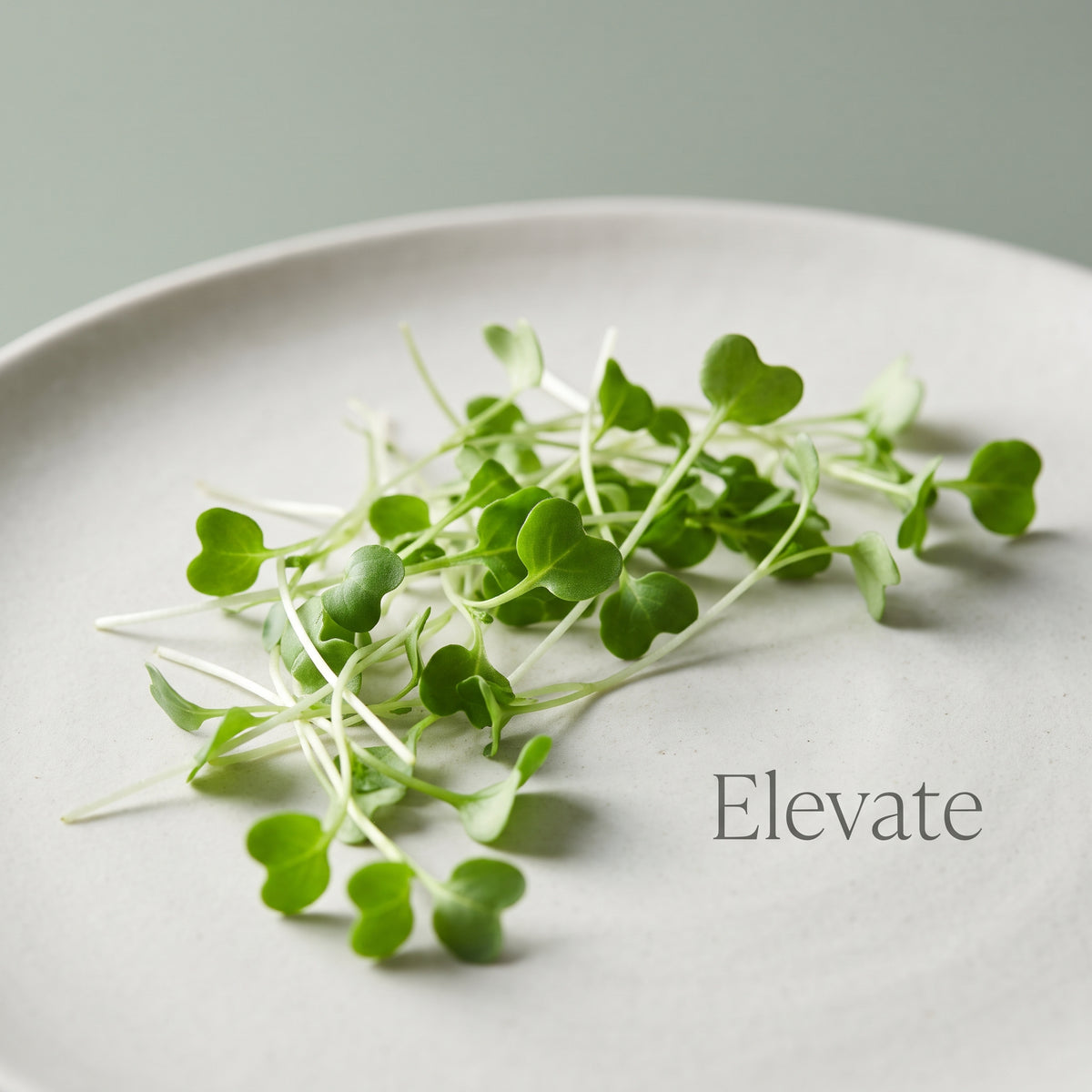
- CHEF’S TASTING NOTES: Orange Flash Calendula Petals enter lightly, with fresh tanginess and a delicate floral-green impression before a controlled bitter note develops. Because LivFarms removes the more bitter flower base, the petals themselves remain refined rather than harsh. Their texture is exceptionally tender with only a whisper of chew. Scattered through a bite, they create repeated small flashes of tang and bitterness rather than the concentrated experience of eating a whole flower.
- FLAVOR PROFILE: Fresh and tangy with restrained bitterness, subtle floral-green character, delicate texture, and a clean lightly savory finish.
- TEXTURE & PERFORMANCE: Calendula petals are thin and delicate, so they should be handled after the sturdier components of a dish are dressed. Acid sharpens their tanginess, while excessive vinaigrette contact or salt quickly softens the tissue. Their slight bitterness works particularly well against buttery greens, gentle sweetness, or savory richness. Add them at final plating or scatter them over warm food after cooking, since prolonged heat softens the petals and dulls their color.
- PLATE PERFORMANCE: Individual petals create a different visual language from whole edible flowers. Rose, copper, peach, and cream tones can be threaded through a salad, concentrated near a savory element, or repeated selectively across the plate. Their narrow curved shapes create movement and rhythm. Deliberate distribution lets the diner encounter both their flavor and color repeatedly rather than experiencing them as random decorative confetti.
Nourish
NUTRITION IN ACTION
- YOUR WEEKLY 30: Orange Flash Calendula Petals count as one plant toward your goal of eating 30 different plant foods each week. They fill the Edible Flowers and Hearty Shoots role while encouraging variety across Soft Greens, Crunchy Greens, Fresh Herbs, Microgreens, and Mushrooms.
- NUTRITION SNAPSHOT: Fresh Calendula petals are eaten in relatively small quantities, so their nutritional contribution should be viewed proportionately. Their most distinctive food-composition feature is their array of naturally occurring plant pigments and phenolic compounds rather than macronutrient density. A 10 g package adds botanical and sensory diversity without being presented as equivalent to a full serving of vegetables.
- PLANT COMPOUNDS: Calendula petals are notable for carotenoid pigments, including several xanthophyll-related compounds, together with beta-carotene, phenolic compounds, and flavonoids. These pigments contribute substantially to Calendula’s yellow, orange, peach, copper, and related tones. Orange Flash should not be assumed to contain one fixed pigment concentration because cultivar, maturity, and growing conditions influence the final profile.
- WHY THIS PLANT MATTERS: Orange Flash Calendula adds a distinctive edible flower to a varied plant-rich diet, bringing tanginess, controlled bitterness, delicate petal texture, and carotenoid-rich coloration. It expands botanical diversity beyond conventional leafy greens and herbs while giving the eater another sensory expression of how different plant tissues contribute to a meal.
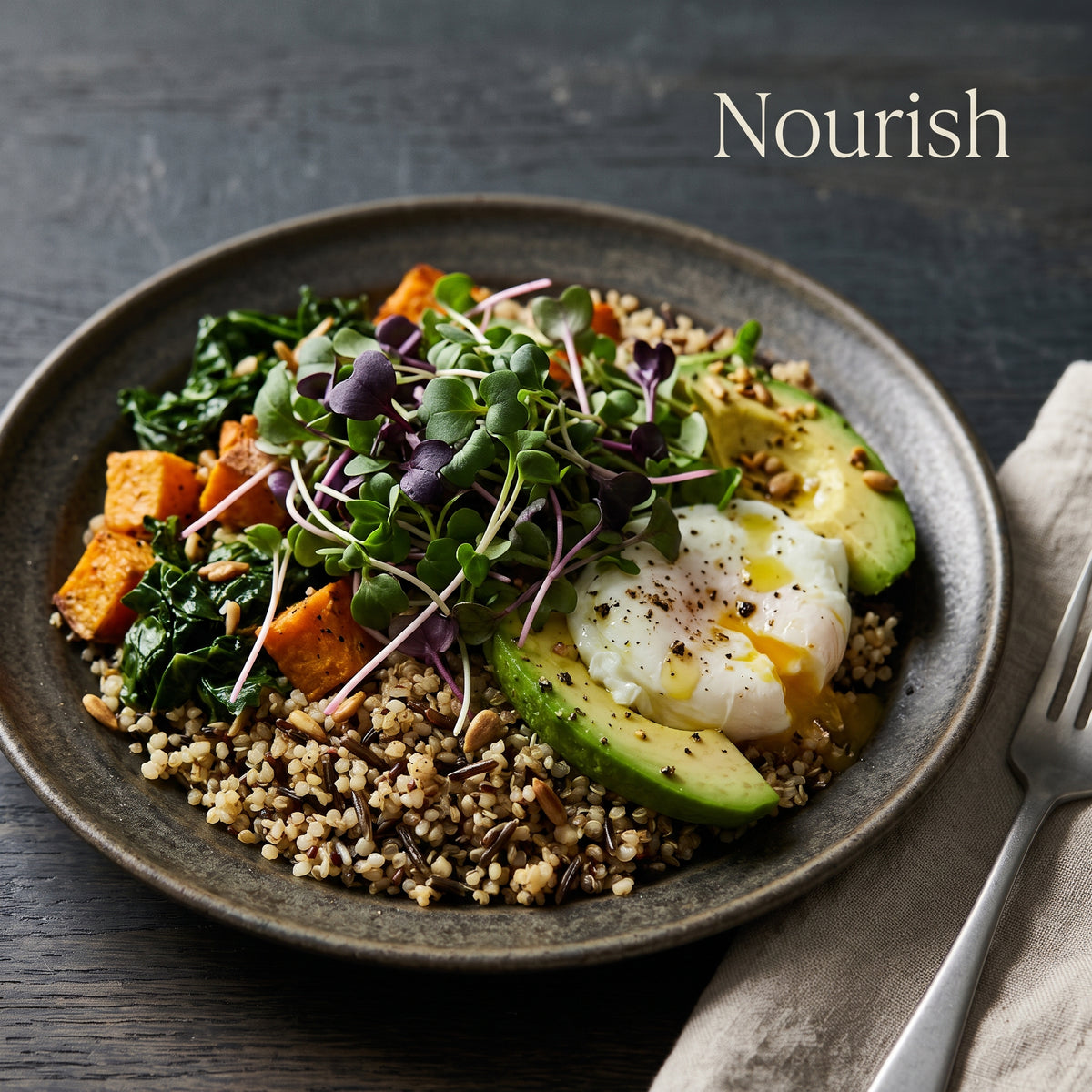
- SIMPLE EVERYDAY IDEAS: Composed salads, grain bowls, soft-cheese plates, vegetable dishes, scattered over warm mushrooms, finished over chilled soups.
