
Red Amaranth Microgreens
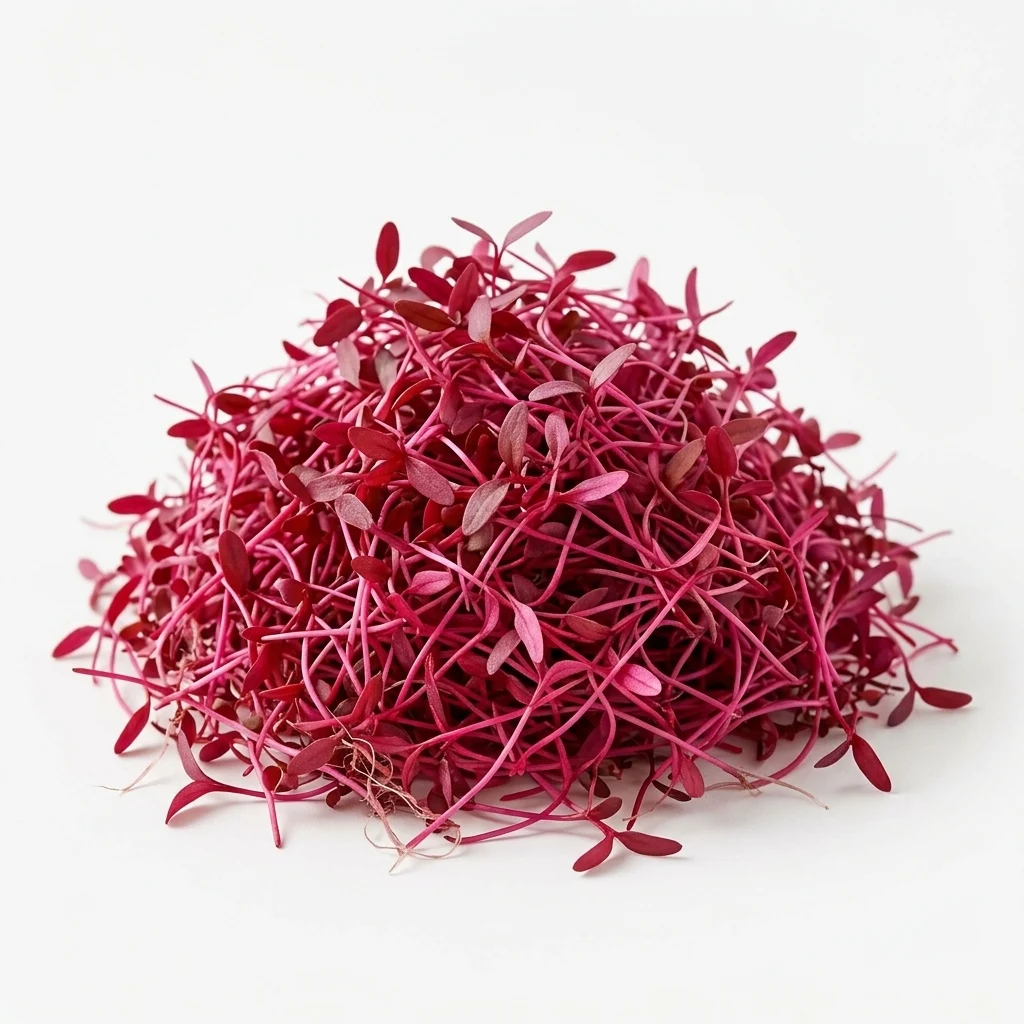
Vibrant Red Amaranth Microgreens combine jewel-toned fuchsia stems, delicate garnet leaves, a tender texture, and mild earthy sweetness for an unforgettable finishing touch.
Choose options
Vibrant Red Amaranth Microgreens combine jewel-toned fuchsia stems, delicate garnet leaves, a tender texture, and mild earthy sweetness for an unforgettable finishing touch.
Inside This Superpower
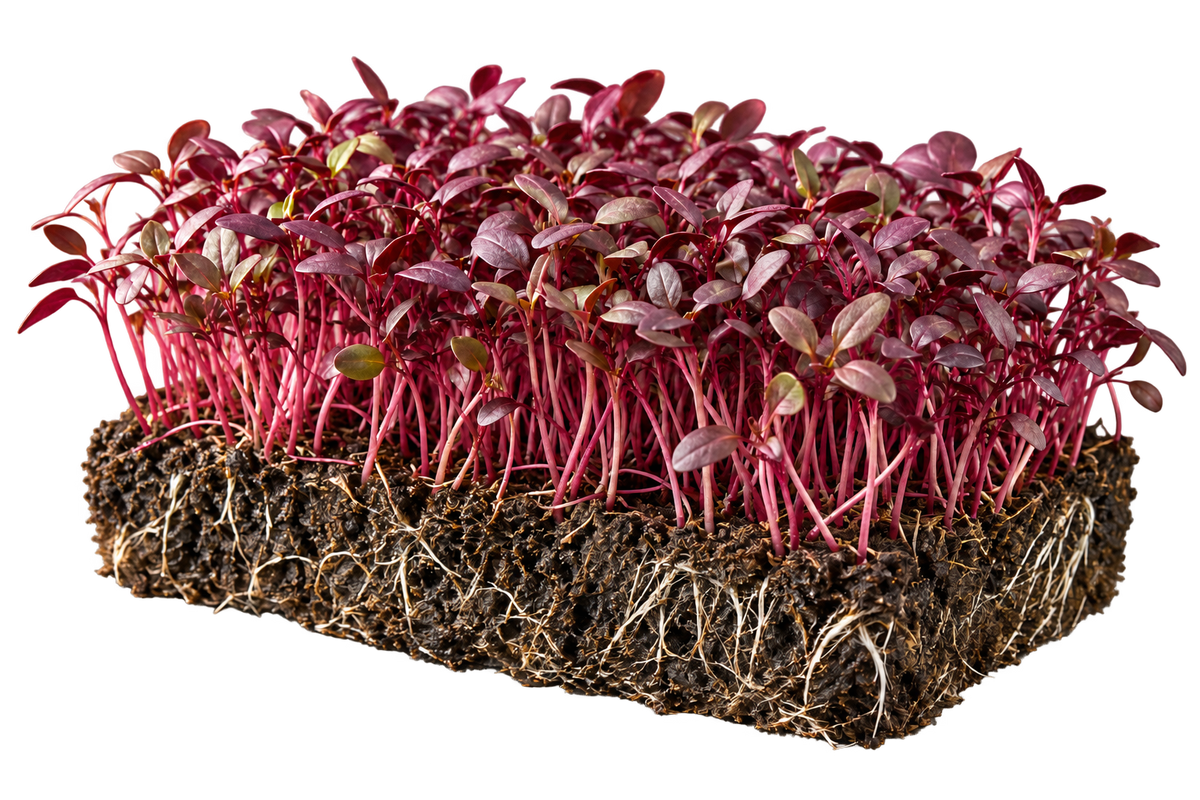
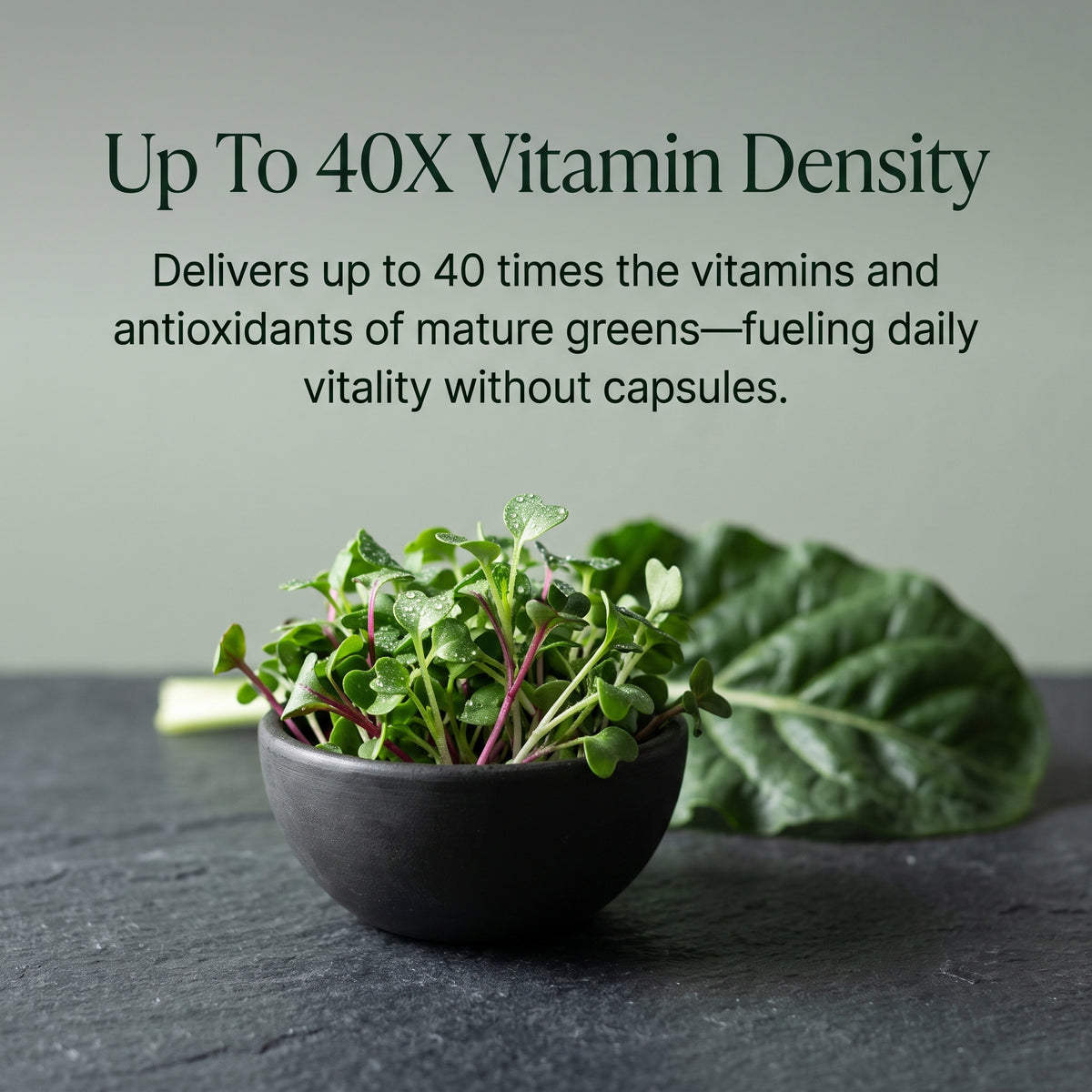
Garnet Red Amaranth Microgreens bring the distinctive character of Amaranthus tricolor to the tender first-leaf stage of growth. This open-pollinated selection develops brilliant fuchsia stems and richly colored young leaves, creating a striking botanical appearance unlike conventional green microgreens. Its exceptionally fine structure and mild, earthy flavor provide delicate texture and visual interest without overwhelming other ingredients.
LivFarms cultivates this specialty variety in a precision-controlled growing environment, with careful attention to water, plant nutrition, and harvest quality. The result is a fresh-cut microgreen that brings exceptional natural color, subtle sweetness, and refined culinary versatility to everyday meals and composed dishes.
Explore its sensory character through Elevate and its naturally occurring vitamins, minerals, and distinctive red plant pigments through Nourish.
- CATEGORY: Microgreens
- VARIETY: Garnet Red Amaranth Microgreens
- BOTANICAL NAME: Amaranthus tricolor
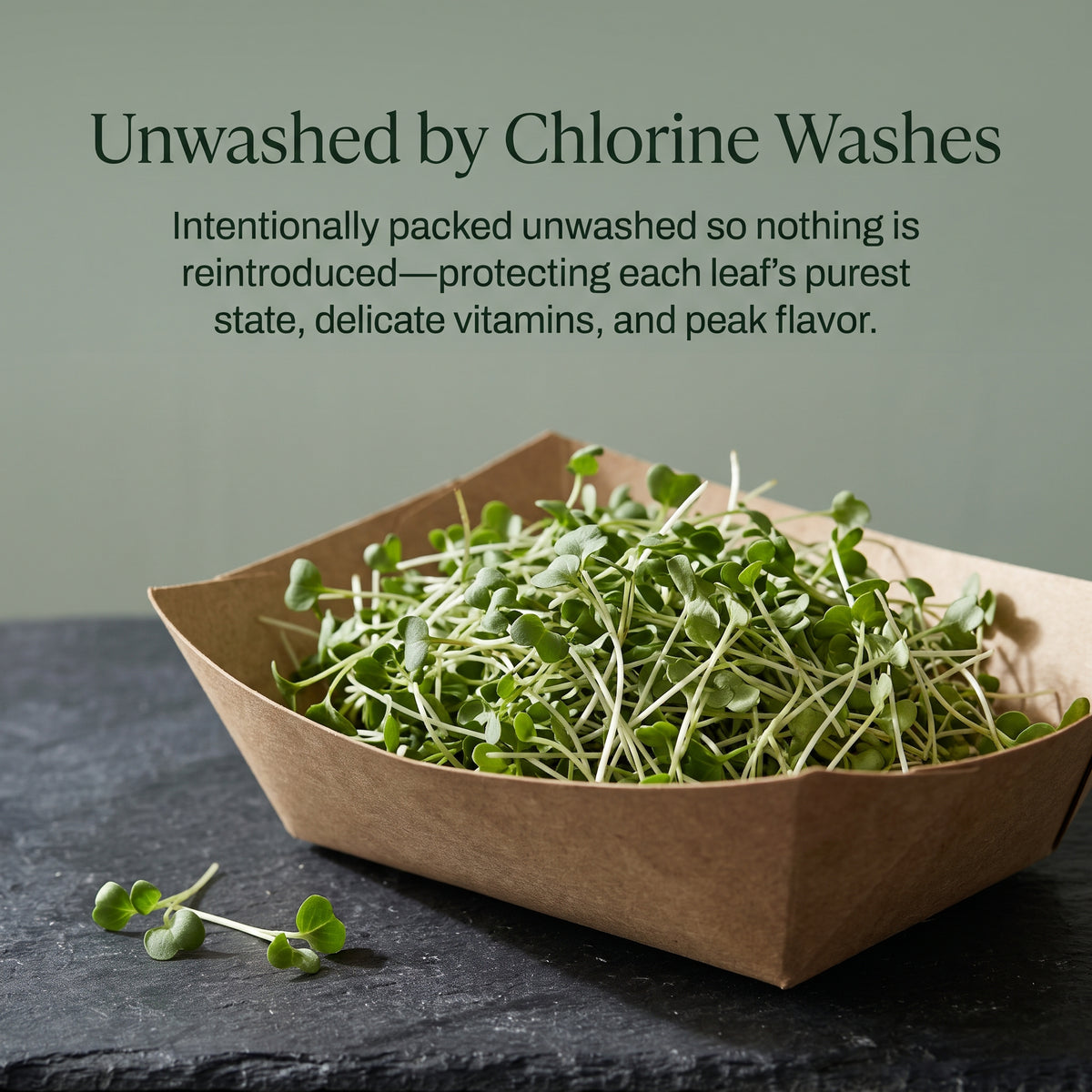
- WHAT YOU'LL RECEIVE: 4 oz of fresh-cut Garnet Red Amaranth Microgreens, packaged unwashed in a press-and-seal tray with a film-sealed top.
- STORAGE: Keep refrigerated at approximately 34–40°F in the original sealed tray, keeping the delicate microgreens dry and limiting condensation.
- BEST ENJOYED WITHIN: Enjoy promptly after delivery for peak color, tender texture, and fresh flavor. Follow the freshness date printed on the package. Typical refrigerated microgreen shelf life is approximately 5–10 days after harvest, depending on handling and storage.
- SERVING & PREPARATION: Gently rinse under cool running water immediately before use and carefully dry. Enjoy raw or add immediately before serving to preserve the delicate stems, vibrant pigmentation, and fresh flavor.
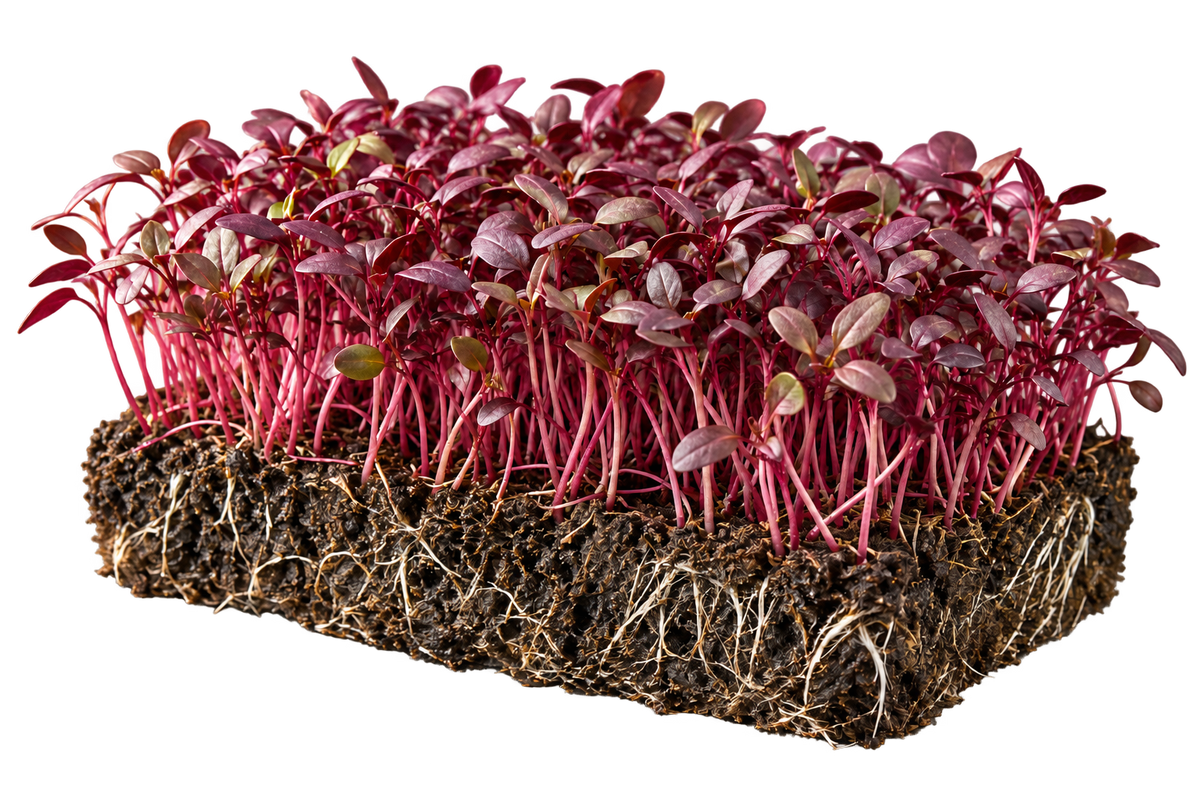
Not All Microgreens Are Grown Equal
Put Your Superpower to Work
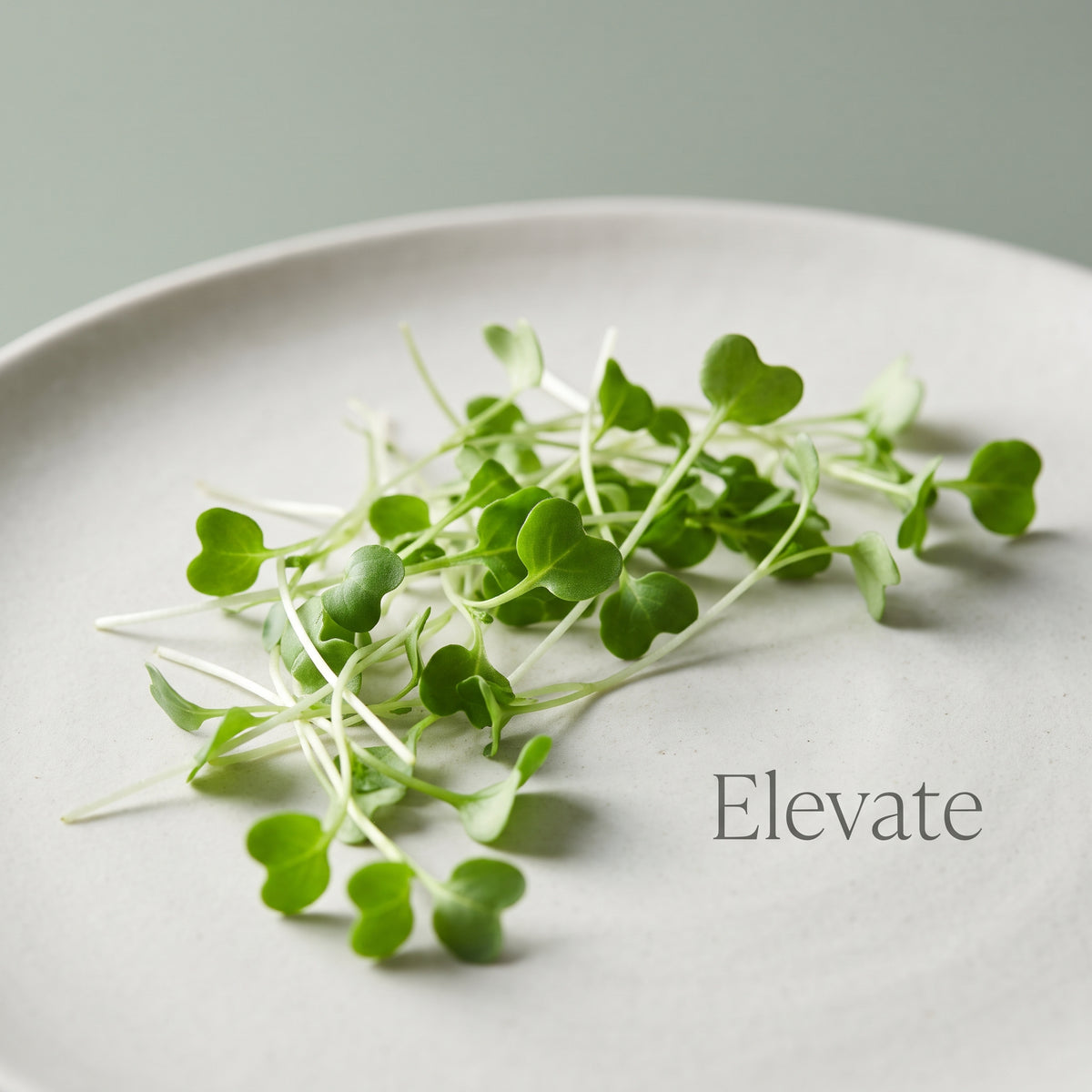
Elevate
NUTRITION BY DESIGN
- CHEF'S TASTING NOTES: Garnet Red Amaranth Microgreens offer a delicate sensory experience distinguished by mild earthiness, subtle sweetness, and exceptional natural color. The first bite introduces fine, tender fuchsia stems and soft young leaves with a gentle vegetal freshness. As the flavor develops, faint earthy and grassy notes emerge, complemented by restrained sweetness and almost no peppery heat. The finish remains clean, mild, and unobtrusive, allowing the microgreens to enhance a dish without competing with its primary flavors. Their greatest culinary strength lies in the combination of fine texture, sophisticated visual presence, and an approachable flavor that complements both delicate and richly flavored ingredients.
- FLAVOR PROFILE: Mild Earthiness • Gentle Sweetness • Delicate Greens • Soft Vegetal Notes • Clean Finish. Garnet Red Amaranth Microgreens deliver a subtle, balanced flavor that enhances dishes through freshness and natural color rather than intense spice. Their gentle earthy character works beautifully with creamy cheeses, roasted vegetables, mild seafood, grains, eggs, and lightly acidic dressings. Unlike peppery radish or arugula microgreens, Garnet Red Amaranth provides a softer flavor experience, making it particularly valuable when the chef wants vibrant visual contrast without introducing heat or bitterness. Its restrained flavor allows the underlying ingredients to remain prominent.
- TEXTURE & CULINARY PERFORMANCE: Exceptionally fine fuchsia stems support delicate red cotyledons, creating an airy botanical texture with light succulence and a soft mouthfeel. Garnet Red Amaranth is particularly well suited to fresh finishing applications, where its tiny leaves and slender stems preserve their natural structure and striking color. Gentle handling is important because the young plants are more delicate than substantial shoots or sturdier brassica microgreens. Light dressings work best when applied immediately before serving, while prolonged exposure to heat or moisture softens the fine stems and reduces their visual definition. Use whole, fresh clusters to preserve their distinctive elegance.
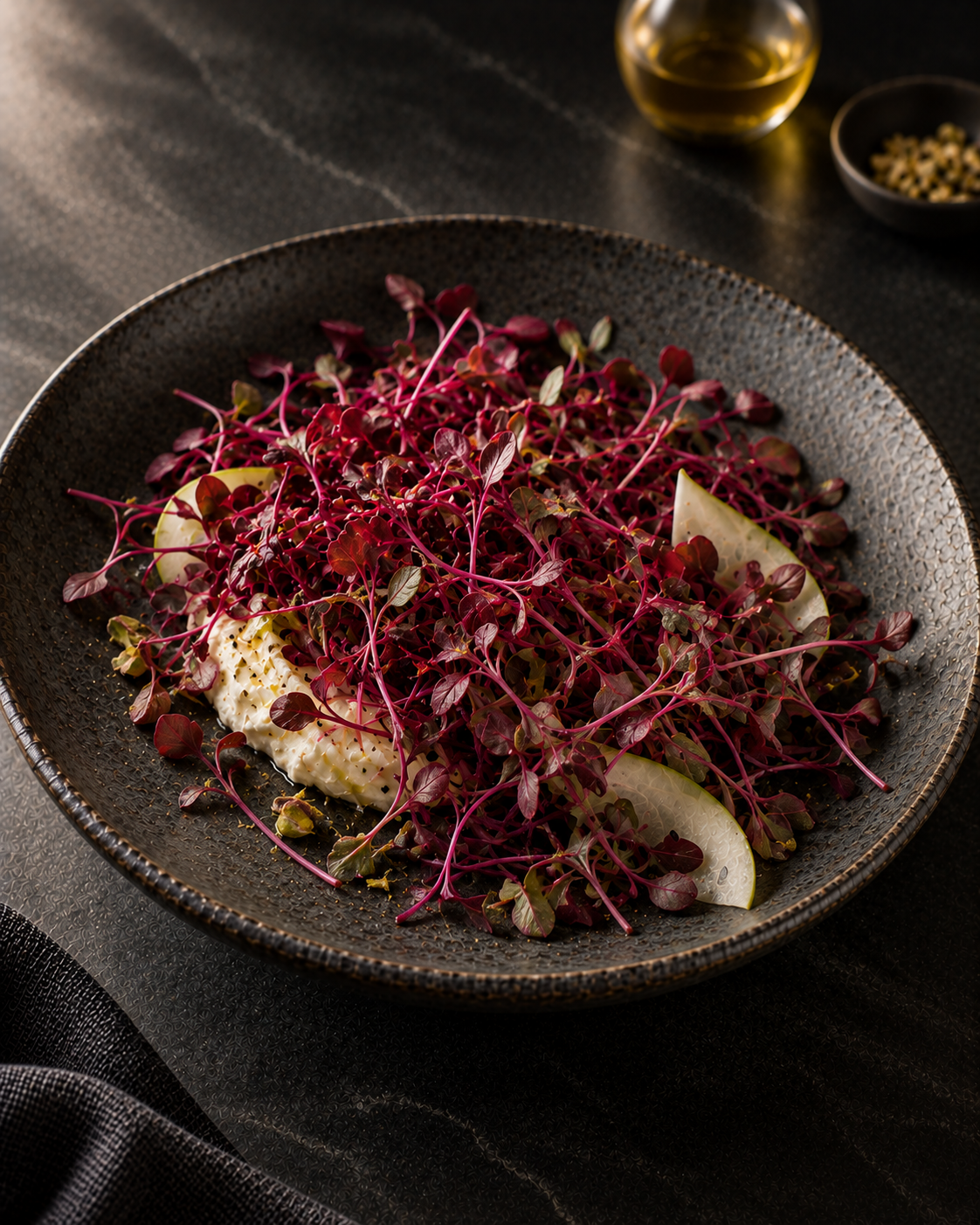
- PLATE PERFORMANCE: Brilliant garnet, magenta, and fuchsia tones give Red Amaranth Microgreens exceptional visual impact on the plate. Fine stems create delicate height and natural movement, while tiny leaves introduce concentrated color without the visual weight of larger leafy vegetables. Small clusters produce dramatic contrast against pale cheeses, creamy sauces, golden eggs, light-colored seafood, dark mushrooms, green vegetables, and neutral ceramic serving plates. Their jewel-toned appearance is particularly effective when used with restraint, allowing a few carefully placed clusters to transform the visual composition of a finished dish. These microgreens bring color, delicacy, and botanical refinement to both contemporary culinary presentations and everyday meals.
- CULINARY PAIRINGS & FINISHING APPLICATIONS: Garnet Red Amaranth Microgreens bring sophisticated color, mild earthy flavor, and delicate texture to a wide variety of dishes. For seafood and proteins, finish roasted salmon, scallops, delicate white fish, grilled chicken, or other savory preparations with small clusters of vibrant greens. For breakfast, scatter them over soft eggs, avocado toast, whipped ricotta, or creamy breakfast bowls. For vegetables and grains, pair them with roasted beets, mushrooms, grain bowls, risotto, or seasonal vegetable plates. They also create striking contrast with fresh cheeses, lightly dressed salads, artisan flatbreads, and composed appetizers. Add immediately before serving to preserve their beautiful garnet color and soft young-plant texture without requiring elaborate preparation.
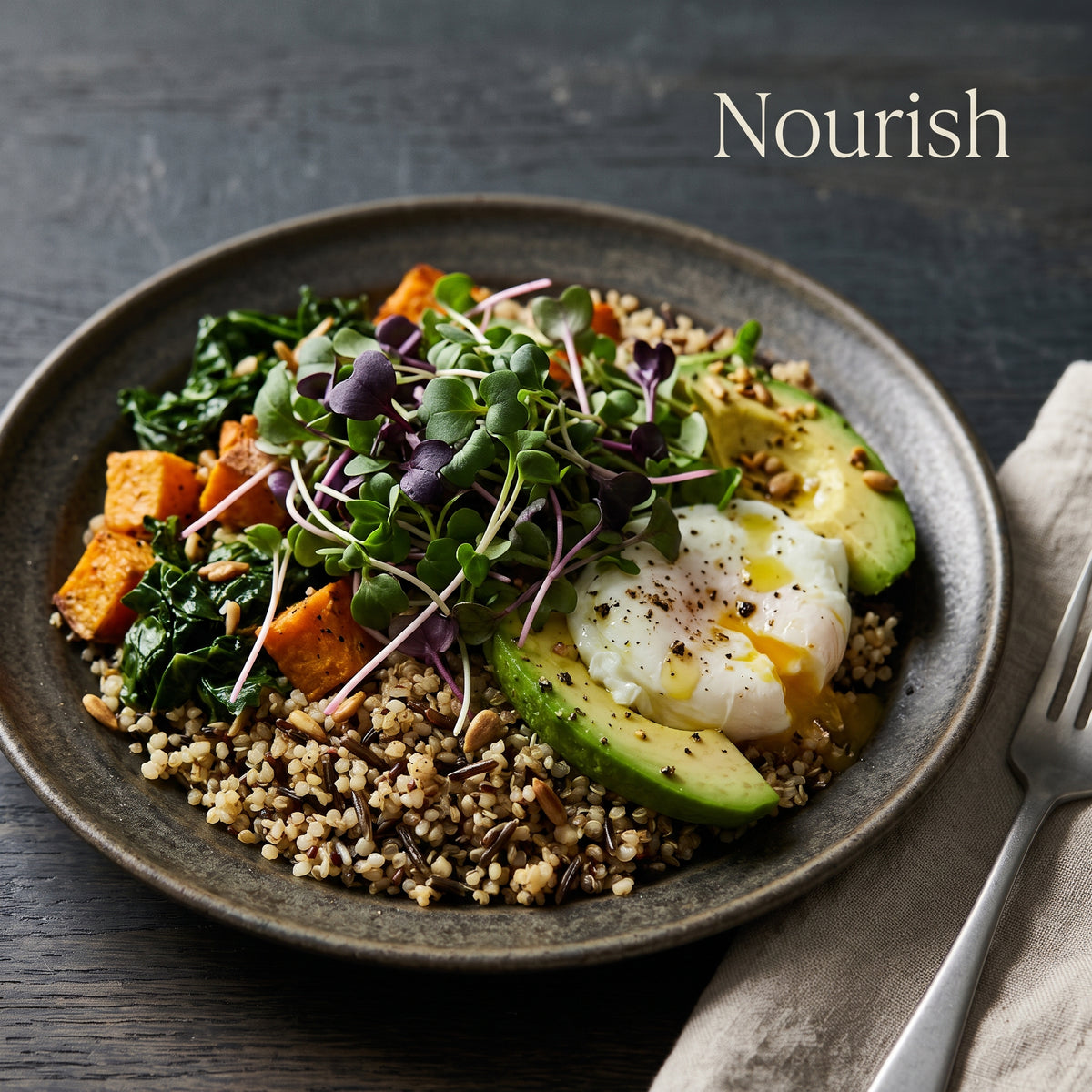
Nourish
NUTRITION IN ACTION
- THE COTYLEDON ADVANTAGE: Garnet Red Amaranth Microgreens are harvested during an early stage of plant development, when their first leaves, known as cotyledons, are actively supporting young plant growth and developing their distinctive red pigmentation. This stage produces a nutritional composition that differs from mature amaranth leaves, including naturally occurring vitamins, minerals, and specialized plant compounds. In a landmark 2012 study examining 25 commercial microgreen varieties, researchers measured 131.6 mg of vitamin C per 100 grams of fresh garnet amaranth microgreens, one of the highest vitamin C concentrations among the varieties examined. These findings demonstrate the nutritional potential of young amaranth plants, while actual nutrient levels depend on seed genetics, growing conditions, and harvest practices.
- NUTRITIONAL SNAPSHOT: Red Amaranth Microgreens contain naturally occurring vitamins, plant pigments, phenolic compounds, and essential minerals. A peer-reviewed 2012 study measured 410 micrograms of vitamin K1 per 100 grams of fresh garnet amaranth microgreens, the highest vitamin K1 concentration among the 25 varieties evaluated. The same study measured 131.6 mg of vitamin C per 100 grams of fresh garnet amaranth microgreens. Additional comparative research on red amaranth microgreens identified a broad range of mineral compounds and reported copper concentrations approximately 2.2 times higher than those of mature red amaranth in the samples examined. These results describe published research samples rather than guaranteed concentrations in LivFarms harvests, illustrating the distinct nutritional composition of young red amaranth plants.
- BIOACTIVE PLANT COMPOUNDS: Red Amaranth belongs to the Amaranthaceae family and is particularly distinctive for its naturally occurring betalain pigments, including the red betacyanin known as amaranthin. Unlike the anthocyanin pigments responsible for the red coloration of many other plants, betalains contribute the characteristic garnet and fuchsia tones of red amaranth. A peer-reviewed 2024 study identified amaranthin and related forms as the dominant betalain pigments in the amaranth microgreens examined. Research has also identified phenolic acids, flavonoid compounds, lignan glycosides, triterpene saponins, and other specialized plant metabolites in red amaranth microgreens. A comparative metabolomics study found that young red amaranth had a distinctive profile of amaranthin and certain phenolic compounds compared with other microgreens and mature amaranth. Together, these compounds contribute to the remarkable botanical complexity of this colorful young plant.
- WHY THIS PLANT MATTERS: Garnet Red Amaranth Microgreens bring together naturally occurring vitamins and minerals, distinctive betalain pigments, phenolic compounds, and a remarkably delicate culinary character. Their jewel-toned leaves introduce an entirely different botanical family from common broccoli, kale, radish, and other Brassica microgreens, expanding the diversity of plants included in everyday meals. Published research has identified noteworthy vitamin C and vitamin K1 concentrations, as well as a specialized profile of red pigments and other plant compounds in studied garnet and red amaranth microgreens. Their mild flavor and tender structure make them especially easy to incorporate into eggs, vegetables, grain bowls, salads, seafood, and composed dishes. Red Amaranth Microgreens offer a colorful, flavorful addition to a varied whole-food diet.
